
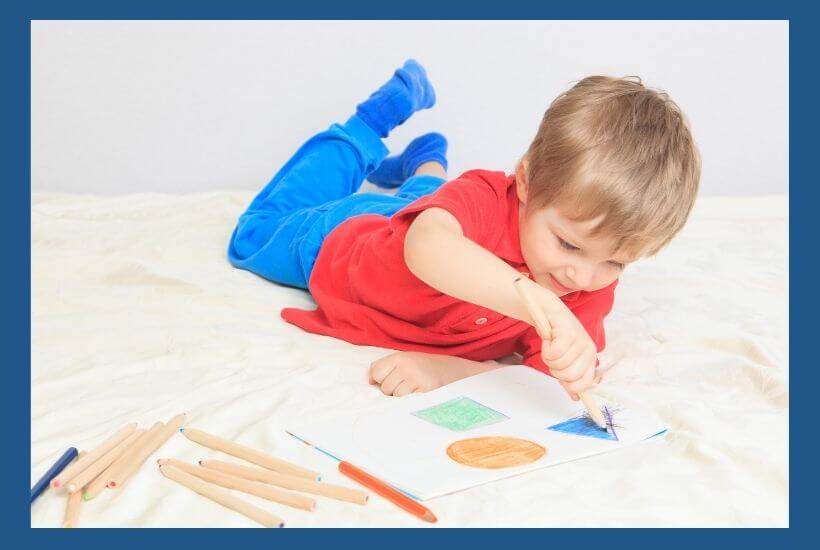
Preparing those little fingers to write can be difficult! Tracing shapes is a great way to practice fine motor skills and practice pre-writing skills. By tracing shapes, your child will practice controlling their pencil (crayon, marker, pen…) all while learning how to make the lines and curves that makeup letters in the alphabet. This is an important first step in learning how to write!
Why Shape Tracing is Important
Tracing shapes is an important activity that will prepare your child for writing letters and numbers. When you look at letters and numbers, they are really made up of shapes (circles, straight lines, curves, and diagonal lines). Tracing shapes gives your child an important first step towards writing letters.
Tracing shapes gives your child some great practice coordinating their fingers, hands, and wrists, and provides fine motor practice that strengthens the muscles in their fingers! This will ultimately prepare your child for writing, drawing, and coloring.
When to Start Tracing Shapes
About the age of two, you can teach your child to trace a vertical line, horizontal line, and circle. They will master these (with practice) around the age of 3.
Around the age of 3, they can imitate a cross shape, and around the age of 4, you can start to introduce the diagonal line, square, and x. At 5 they can draw the triangle.
Writing letters will be extremely difficult without first practicing pre-writing skills.
How to Teach Tracing Shapes
First, start teaching your child to recognize shapes. We started with squares, rectangles, triangles, and circles. You may find our ideas for Activities for Teaching Shapes helpful! We also love to read books about shapes.
Next, get your child more comfortable with how to form shapes by air writing, or using sensory materials. You can have your child use their pointer finger to make shapes in the air, or give them some streamers to “draw” shapes in the air with.
Kiddos also love to touch and explore different textures. Fill a pan with shaving cream, flour, or sand, and have your child trace letters with their finger.
Finally, you can have your child trace shapes with a writing utensil, but make it fun! When I was in school, we always used a pencil so we could erase our mistakes. When your child is learning to control their pencil, make it more exciting by using different writing utensils. Use fun markers, colored pencils, smelly crayons… anything that will get your child excited to draw.
More Shapes Resources and Printables
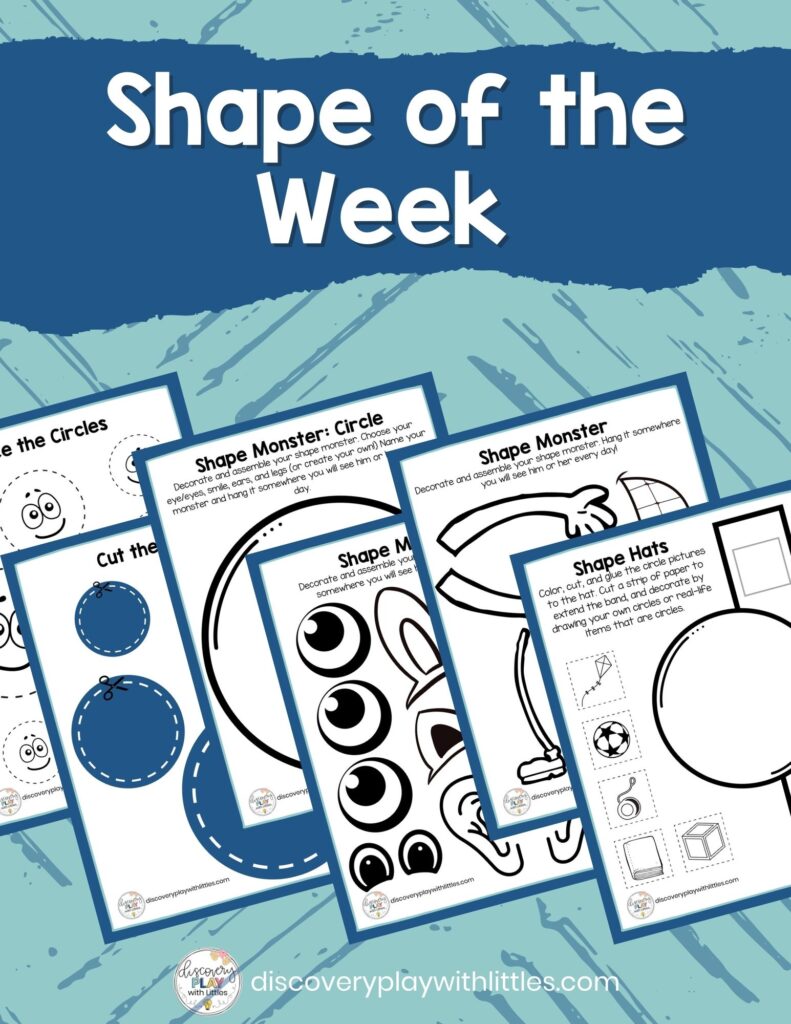
If you are looking for more shapes resources, you may be interested in our Shape of the Week Activities! In this Shape of the Week Curriculum, you will find 7 activities (for each shape) that teach shapes, practice fine motor skills, and ignite creativity. While learning each shape, your child will make a shape monster, create sun catchers, cut the shape, decorate the shape with play-dough, decorate a shape poster, make a hat, and, of course, trace the shape!
Your child will love learning about circles, squares, triangles, rectangles, stars, ovals, hearts, hexagons, and pentagons, and you will love that each activity is fully prepared, ready to go!
Check out our Shape of the Week Curriculum:
You Might Also Enjoy:
Why is Pincer Grasp Important?